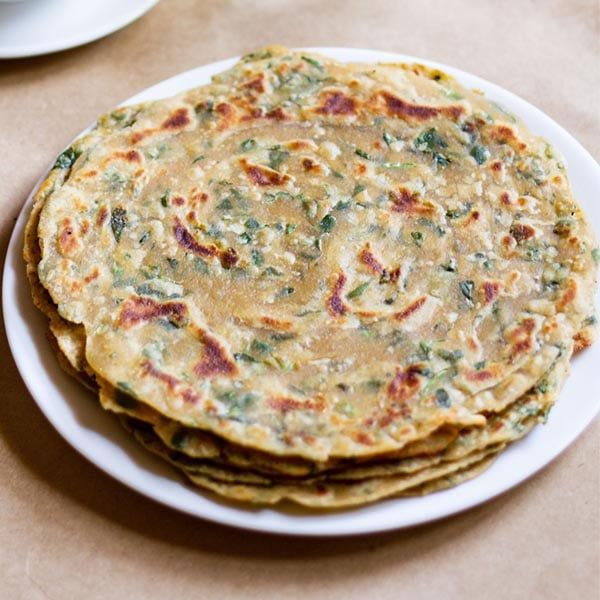
Ingredients
- 2.0 cup Wheat Flour
- 1.0 cup Fenugreek Leaves
- 1.5 tsp Garlic
- 0.5 tsp Green Chilli
- 1.0 tsp Butter
- 2.0 tsp Ghee
- 0.5 tsp Salt
- 0.33 cup Water
Cooking Steps
- Place the fenugreek leaves in a bowl filled with water and to which ½ teaspoon baking soda and 1 tablespoon vinegar has been added.
- Soak for about 2 to 3 minutes, later draining all the water.
- Soak the leaves in clean water for a couple of minutes. Swish and move the leaves gently with your fingers. This removes any soil or mud particles that are on the stems or leaves.
- Drain the water again. You can repeat this process of soaking and draining once or twice or choose to thoroughly rinse the leaves under running water for a few times. Finally, drain the water well.
- Place the leaves on a kitchen towel and spread them evenly on it for a few minutes or you can proceed to chopping them.
- In a bowl mix the whole wheat flour and salt.
- Add the chopped methi leaves, green chilies, garlic, oil and mix again.
- Pour water little by little and mix the dough first. Later knead to a smooth and soft dough adding water as needed.
- Note that the water proportion will vary with the water content in the fenugreek leaves and the type, variety of wheat flour.
- Tip 1: If the dough looks sticky, add a few tablespoons of whole wheat flour and knead again.
- Tip 2: If the dough looks dry or dense, add a couple of tablespoons of water and continue to knead.
- Pinch medium sized balls from the dough. Roll them between your palms to make a neat round ball.
- Flatten the dough ball and dust it lightly with some flour and the rolling board as well.
- With a rolling pin, roll the dough into medium sized roti or circle having 7 to 8 inches diameter.
- For a flaky, crispy layered paratha, spread ghee all over and fold twice into a triangle shape. Then roll them to a large triangle shaped dough sprinkling flour lightly.
- The layering method with ghee adds more fat in your parathas, but if you want a simple lighter version, then roll them plain with brushing any ghee on the dough as done in this recipe.
- Heat a skillet or tawa on medium-high to high heat. Place the rolled methi paratha on a hot tawa or griddle.
- Tip: To check the hotness of the skillet, sprinkle a pinch of flour on it. If the flour browns in a few seconds, the skillet is hot enough for roasting paratha.Wipe this roasted flour on the skillet with a kitchen napkin before placing the paratha on it.
- When one side is a bit cooked or about ¼ cooked, flip the paratha. You will see some air pockets beginning to form on paratha.
- Spread some oil or ghee (clarified butter) on the side that is facing you.
- Flip again and you should see some brown or golden spots on the paratha. Spread ghee on this side having the golden spots.
- Flip again a couple of times, until the paratha is evenly roasted and has some golden spots or blisters. Press the paratha edges with a spatula so that they get cooked.
- Roll the remaining dough balls and make the methi parathas this way. While making the second paratha don’t forget to wipe the skillet with a kitchen napkin if there is any excess whole wheat flour on it.
- Methi paratha is best served hot. However, it can be served warm or at room temperature. You can also stack them in a roti basket or casserole box/container.
- Easily enjoy for breakfast, lunch, or at dinner. My favorite things to serve with methi ke parathe are vegetable curries, sweetened curd, or pickle.
- Some people like to have parathas with plain curd (yogurt), mango pickle, lemon pickle, or green chili pickle. It all depends on your preference!
- They can also be wrapped in foil and packed in lunch boxes or for short journeys. Methi roti make a good tiffin box snack and stay soft when packed in a foil.